
It will never stop raining
And the tool to find your best weather in Spain


Galicia is currently experiencing the highest rainfall anomaly on the planet. As one of the wettest regions in Europe, that’s saying something.
According to La Voz de Galicia, it has rained on over 70% of days since November. In January, some stations in the region recorded more than 1,800 litres per square metre - equivalent to a full year’s rainfall.
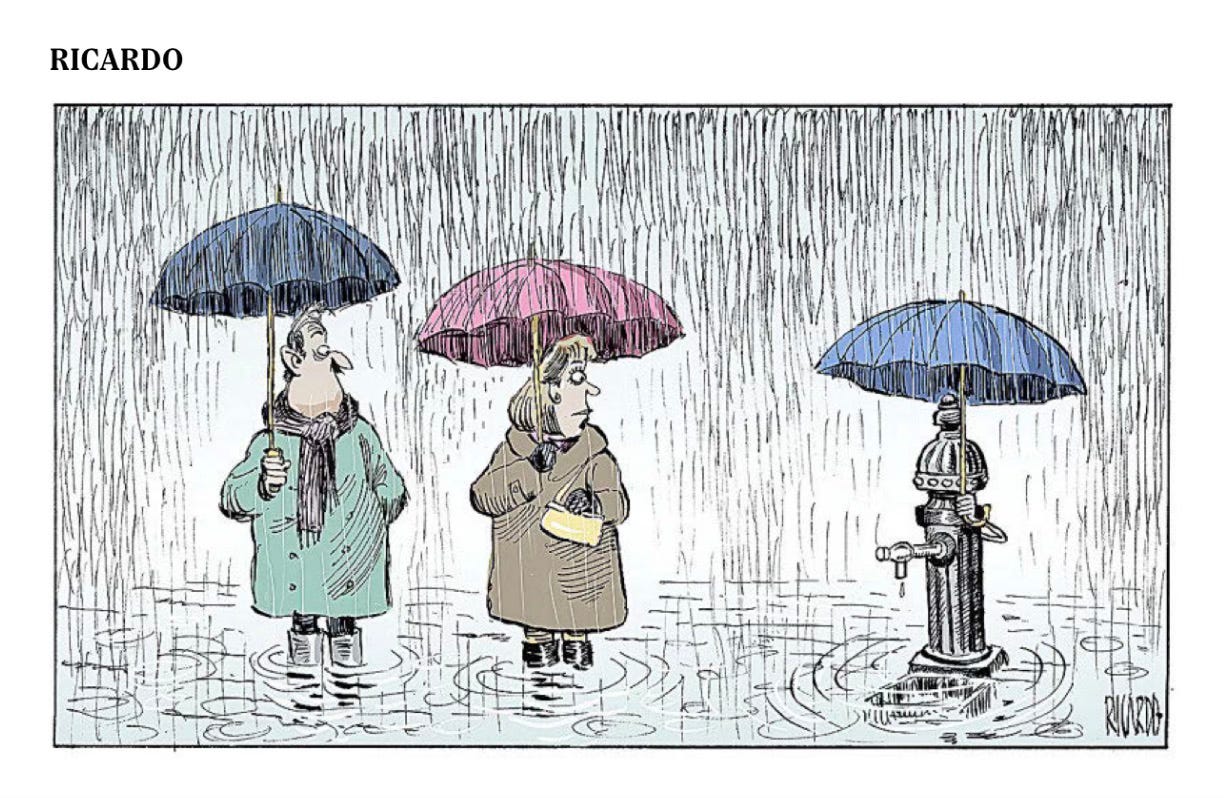
Rather than scrolling through spring sunshine holiday inspiration that the algorithms have waiting for me, however, I’ve been reading about rain.
It must be that morbid Celtic fascination with dampness that us Irish share with our Galician cousins - this is, after all, a region whose language has more than 70 different words to describe rain.
So I’m currently reading Ninety-nine Words for Rain by Manchán Magan. An author, broadcaster and documentary maker, Manchán was one of the driving forces behind the revival of the Irish language over the past decade.
He enjoyed huge success with Thirty-Two Words for Field, a book rooted in the bond between land and language.
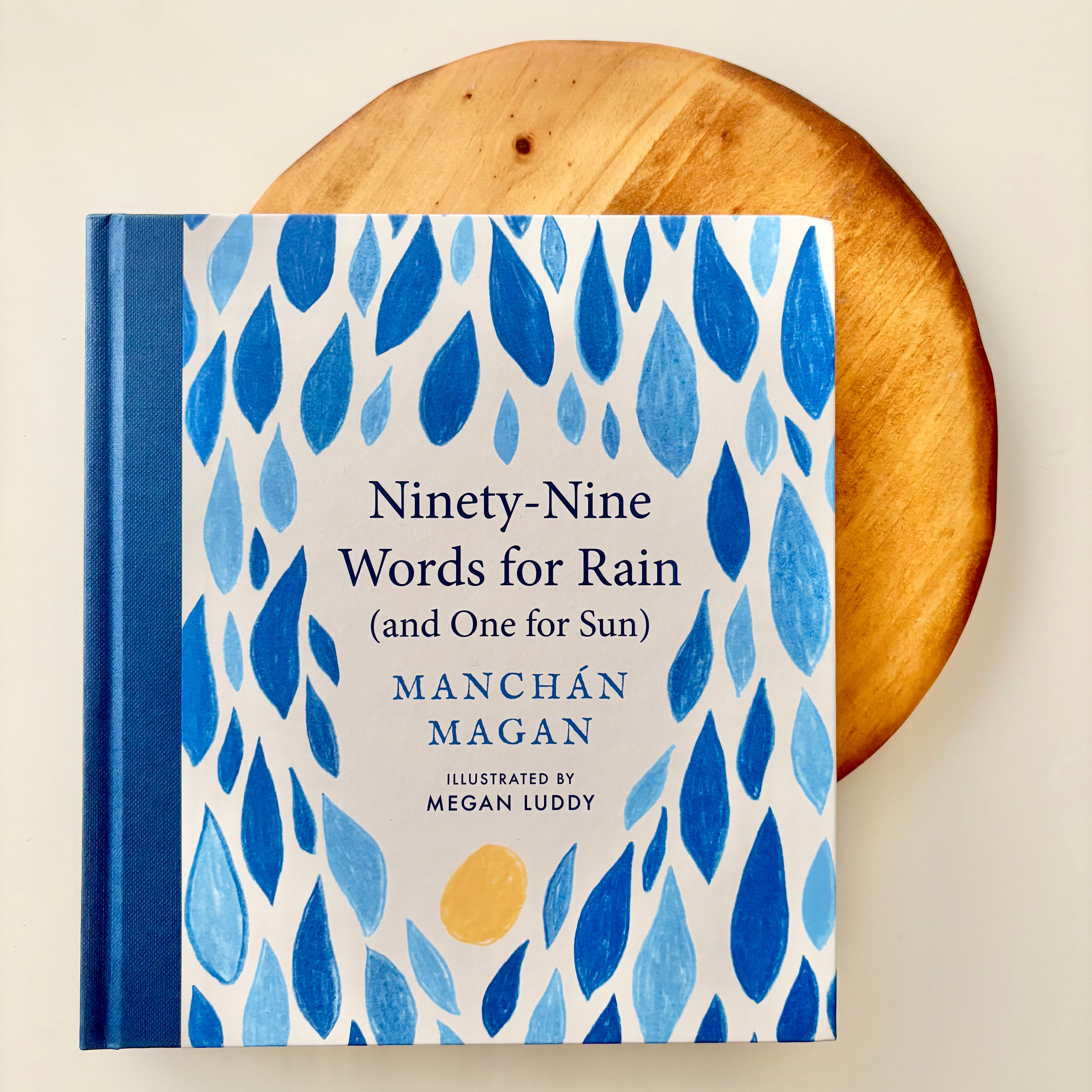
Manchán died in October at the age of 55 following a terminal diagnosis of prostate cancer, just a month after the beautifully-illustrated book about rain was released.
He had many more books of wisdom to share, but they’re gone with him to the grave.
Ireland is worse off for his passing.
It’s hard not to sense some sort of supernatural mourning for a man so closely connected to the elements - it hasn’t stopped raining since his funeral.
There are some fabulous Irish words for rain in Manchán’s book that we have lived through here in Spain this winter.
In A Coruña, the school runs were met with lascadh báistí - what he describes as “a rain with wind that lashes, whips and flogs you.”
Running to the local frutería and panadería, we gritted our teeth through greadadh báistí - “a pelting, beating, trouncing rain that drenches you to the skin.”
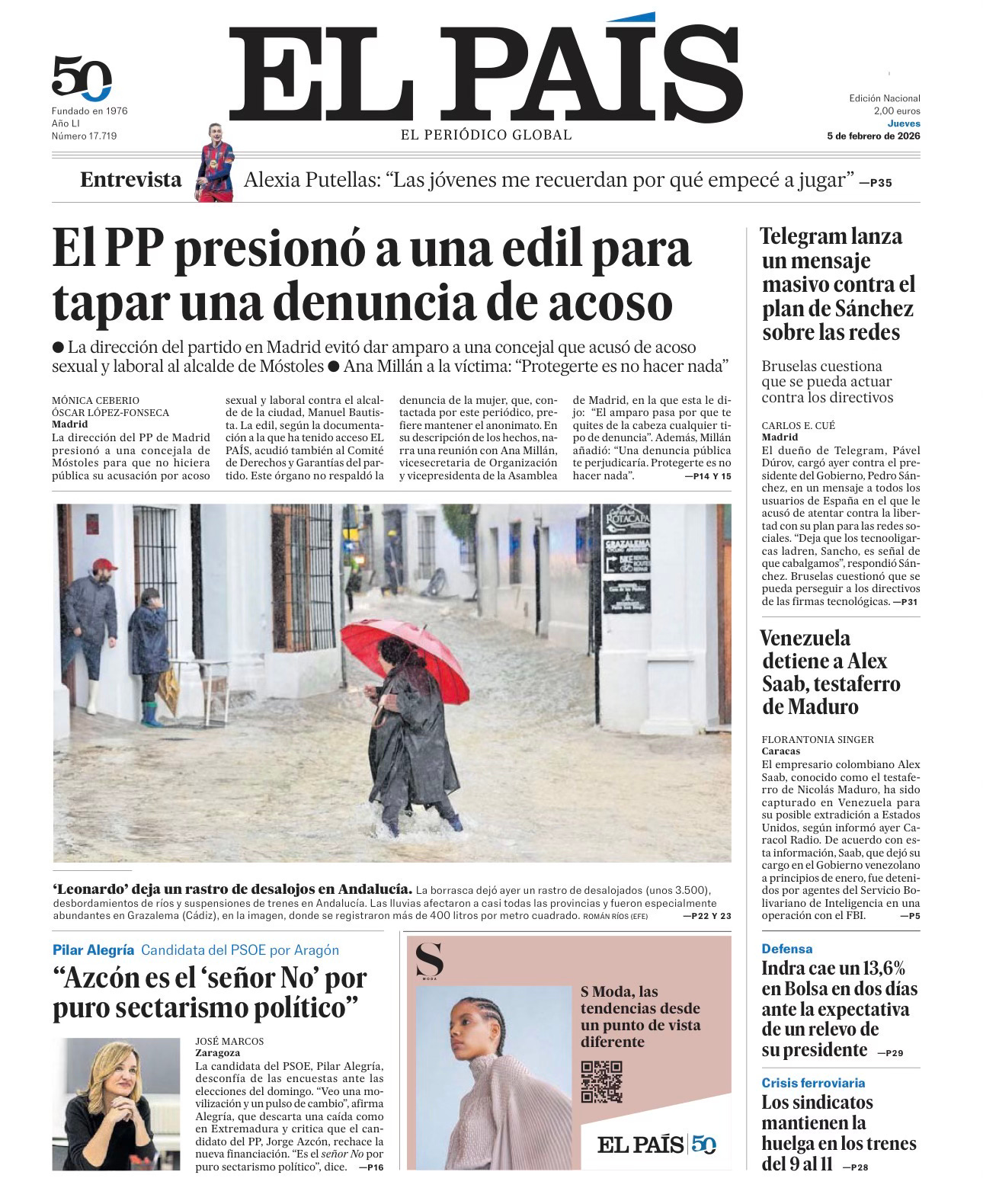
Parts of Andalusia endured dallcairt - “raining so heavily that you cannot see ahead.” Grazalema, a village located in the province of Cádiz, recorded 526.9 mm of rain in 24 hours - about half of Ireland’s yearly rainfall.
More than 1,500 locals had to be evacuated from their homes.
In Sayalonga, Málaga, a woman went missing after being swept away by the Turvilla River while trying to rescue her dog. It took two days to find her body.
The bigger picture
Under the deluge, it’s easy to forget that in February 2024 the Catalan government declared a state of emergency for drought. And the severe water shortages in Málaga and other parts of southern Spain.
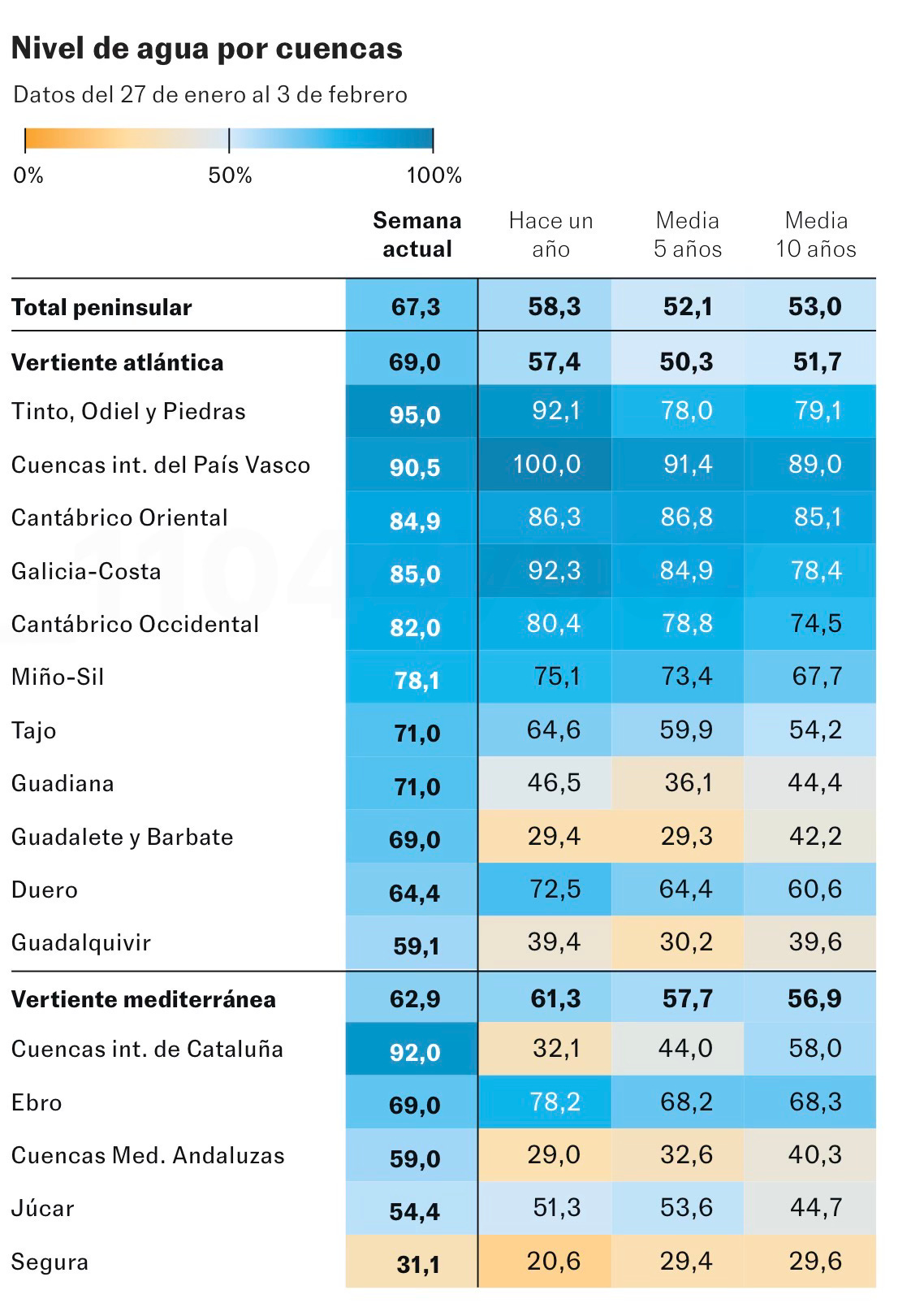
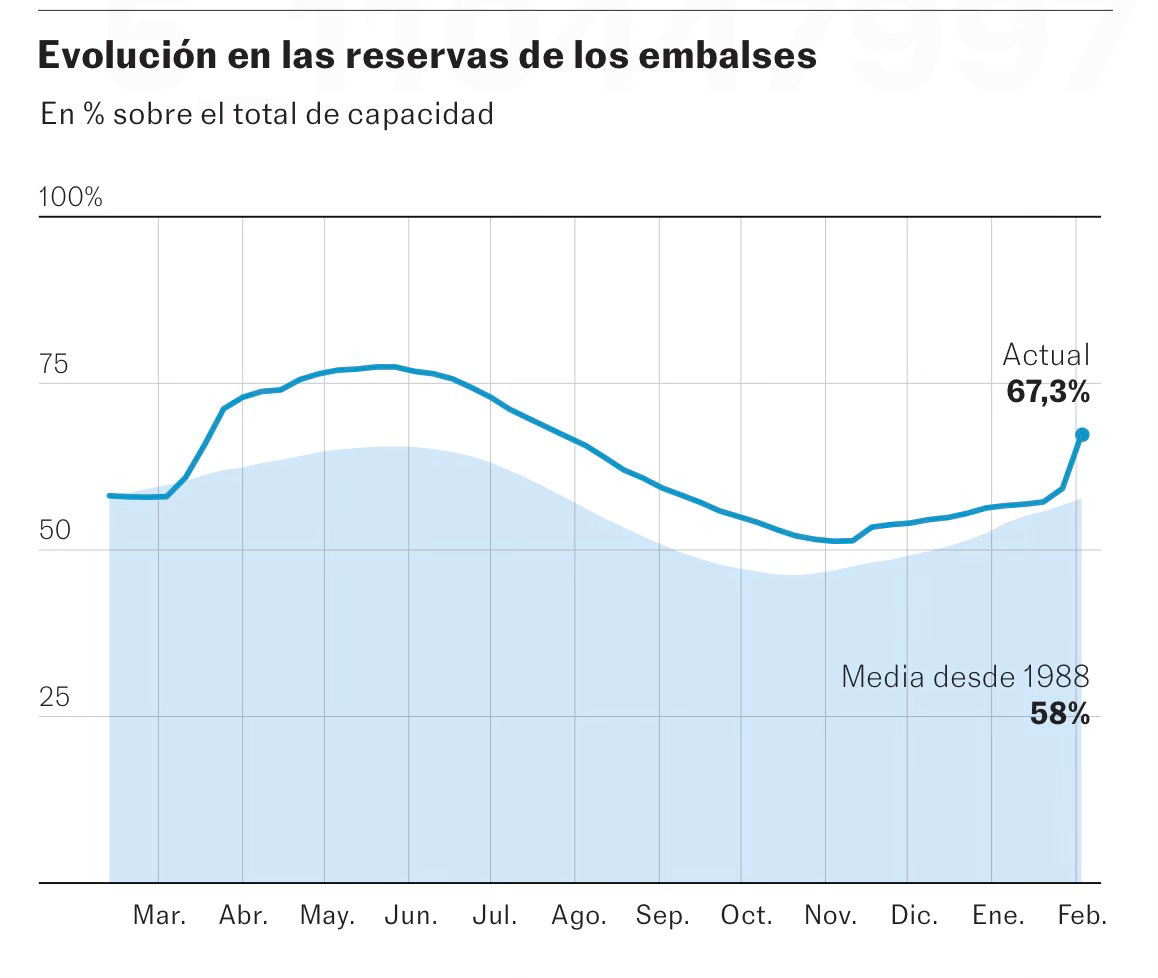
According to El País, reservoir levels in mainland Spain are at 67.3%, more than 14 points above the average for the past decade.
In a country where about 40% of the land is at more than 50% risk of desertification, the rainfall of the past few months was needed.
Word of warning
Most of us have spent the last two months moaning about the rain - some are looking at the risks ahead.
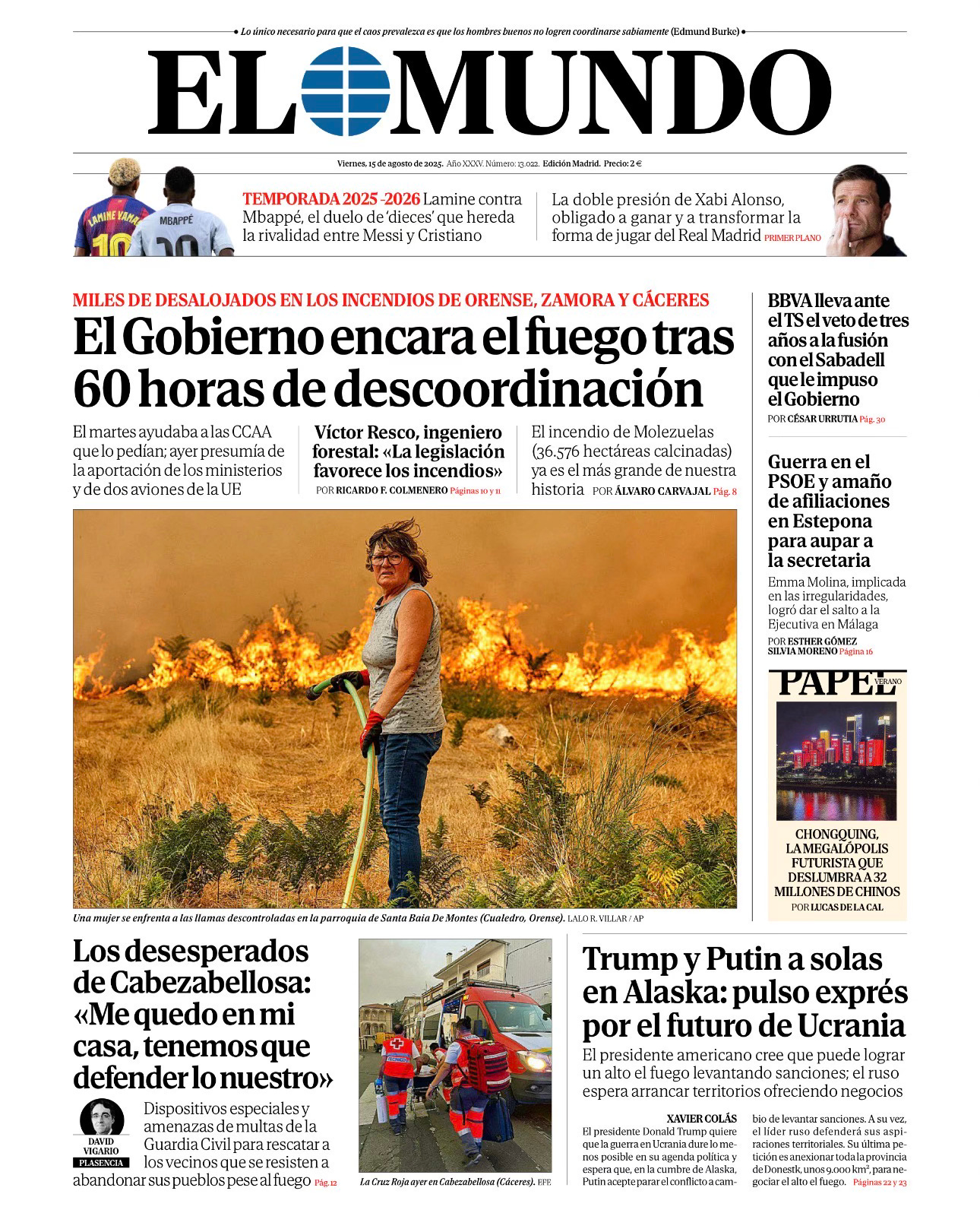
Here’s a letter in El País from a reader in Córdoba, titled Wildfires are dealt with now:
“This rainy spring looks good from the road, with green hillsides and thick roadside growth. But for those of us who work the land, the picture looks different. The grass that shines today becomes fuel tomorrow if we get a hot, dry summer. We saw it all too clearly last year. Prevention doesn’t begin when the alarm sounds - it begins months earlier by taking care of the land.”
Spain’s increasingly volatile weather gives extra weight to this warning.
A wet winter can turn into a sweltering summer in days, converting lush vegetation into highly-flammable material.
Your best weather in Spain
The tumultuous climate of the past few years has had me thinking about where the best weather in Spain actually is.
But then again, the very notion of best weather is subjective.
For my Brazilian wife, wandering around Madrid in 35-degree heat is heaven. For me, it’s hell.
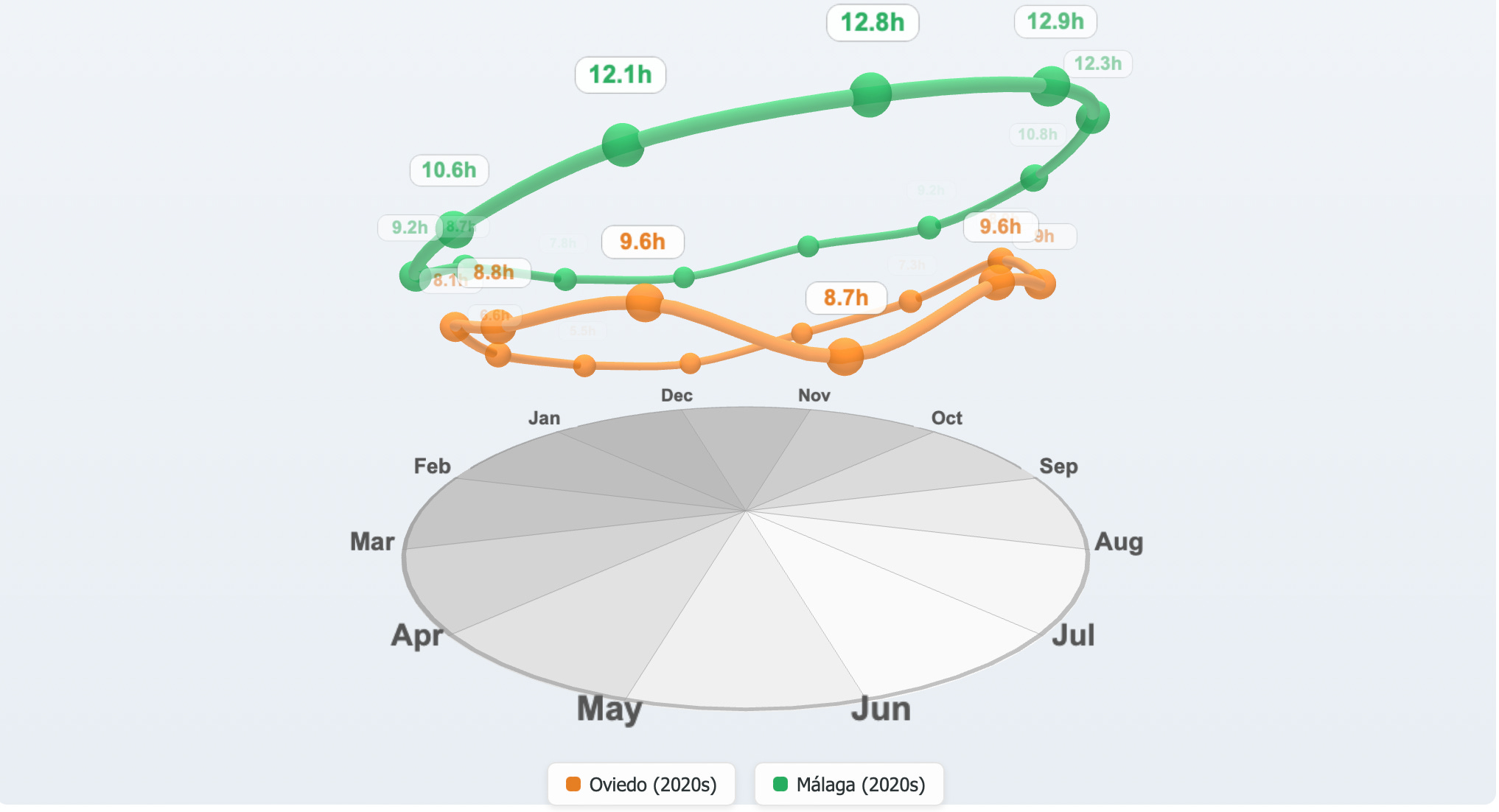
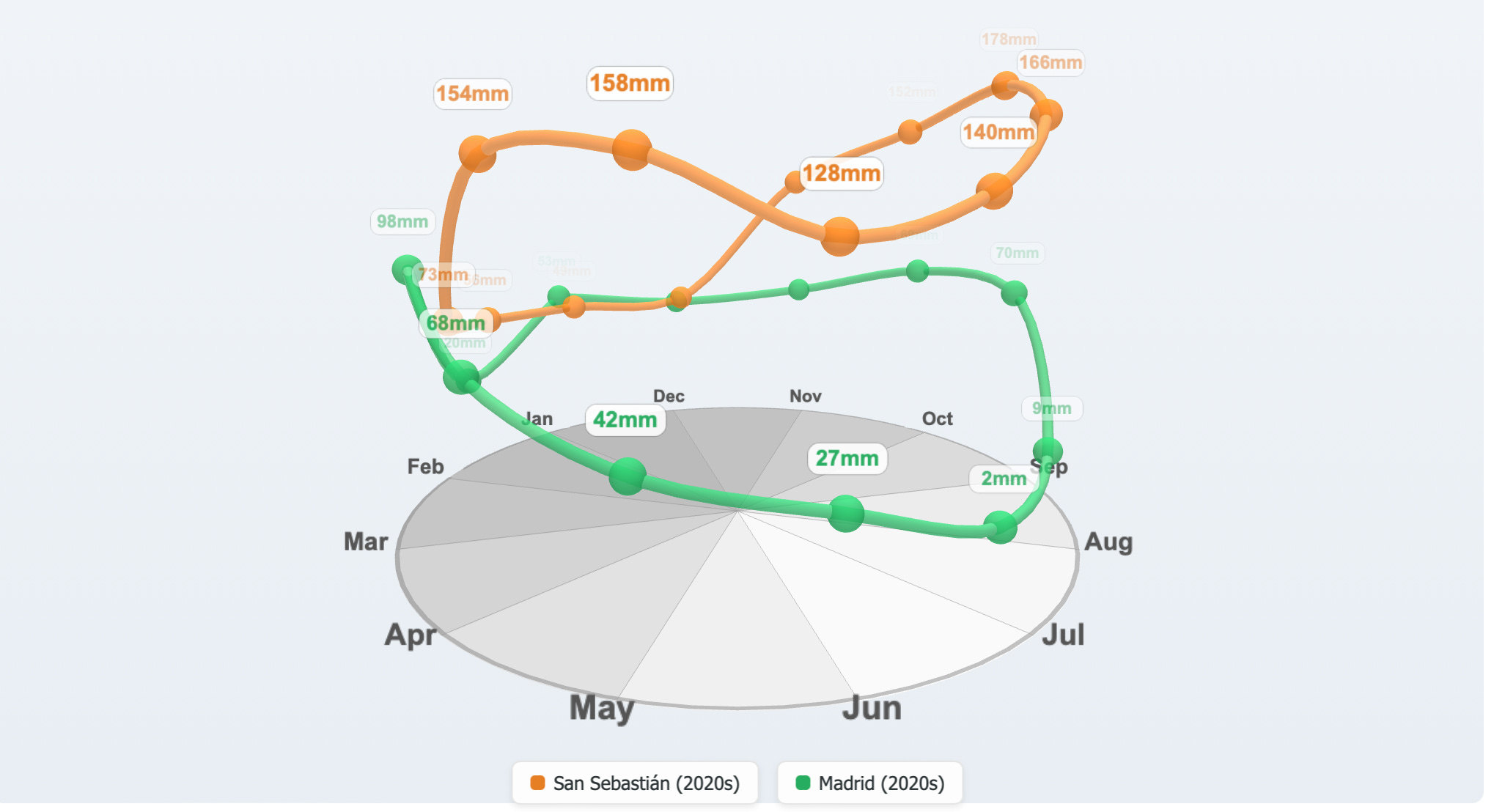
This week I wanted to share this cool 3D tool I came across online. It allows you to compare cities in Spain (and all over the world) by average monthly temperatures, rainfall, and sunshine.
Here are some examples:
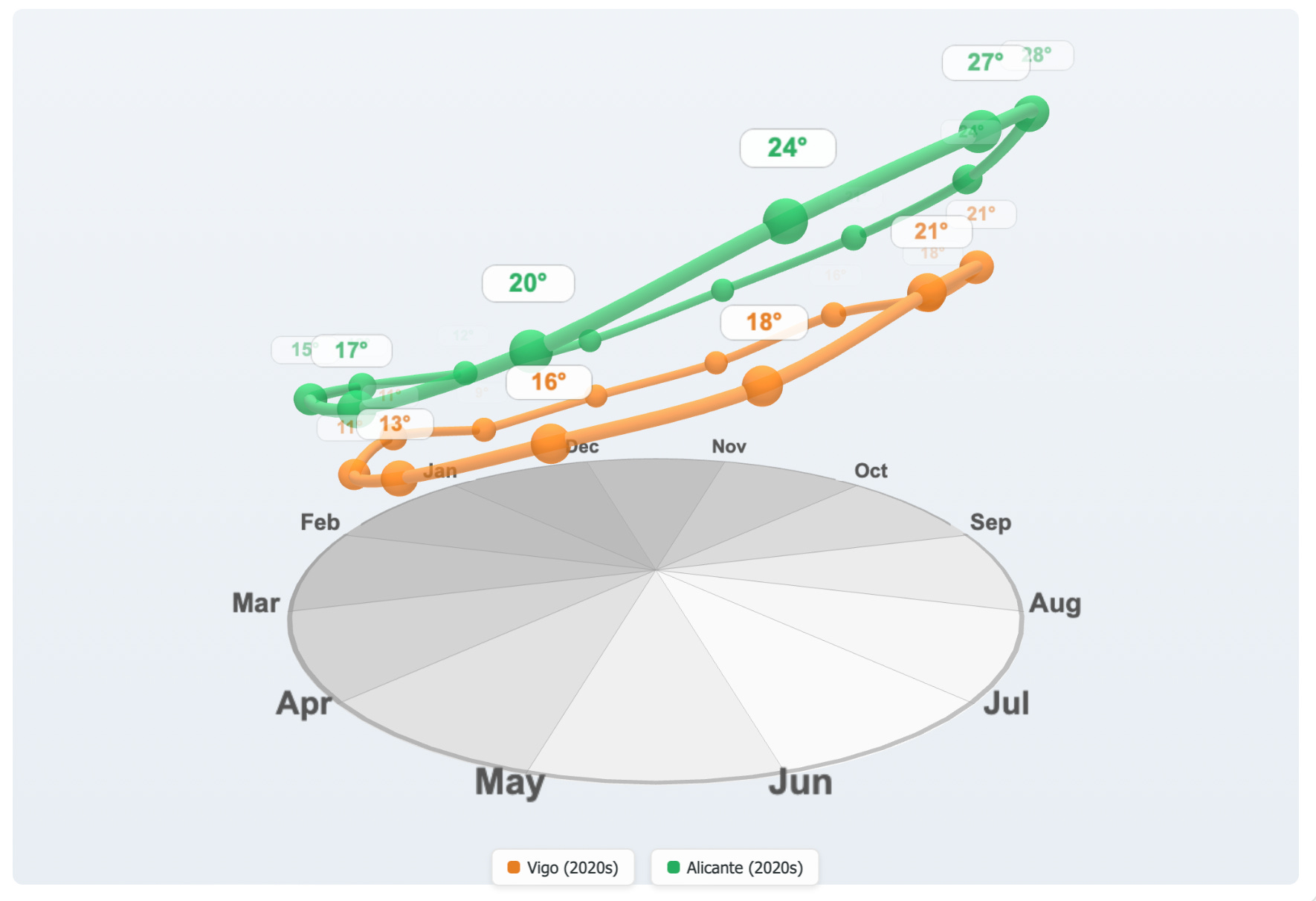
Climate will be a key conditioner of Spain’s future - shaping energy, water supplies, agriculture, and population patterns.
If you’re thinking of moving or investing here, it would be foolish not to take climate into account.
Tools like this will help you make better decisions.
Until next time amigos,
Brendan
***You can support the research, translation, writing, editing, and newspaper subscriptions behind this content with a one-time contribution - gracias!***
Photo of the week: Pulpo in Pontevedra - the city we’ll always call one of our homes in Spain.

The scenes out of Grazalema have been astonishing. The evacuated townspeople spoke of strange noises from the earth - apparently hydroseismic events due to the saturated acquifer. It's one thing to be flooded by a rising river, but the water rising up out of the ground itself must be very hard to guard against.
Also impressive to me: how a town of 2,000 people can be evacuated from one day to the next and temporary accommodation set up in Ronda with beds, food, and entertainment for the kids. Something we also see on a smaller scale during the local wildfires. I wonder (without any knowledge, mind) whether a UK or Irish local council could manage such a thing?
I’m in Granada atm and there was a moment of “dallcairt” yesterday - like a solid wall of water. The effect on all the drains coming down through the Albaicín was instant!