
It's the final countdown
Spain unites behind its barrio team before its biggest night.

It’s not unusual for Madrid’s biggest and smallest top-flight football teams to be in the headlines in spring. But this year, everything is upside down.
Real Madrid are embroiled in institutional chaos - infighting, a player hospitalised, a president shouting conspiracy theories into the wind like King Lear. If you were going to predict which club in the capital would have punch-ups within its ranks, you would have reasonably assumed it was the one whose stadium houses the Madrid Boxing Federation HQ.
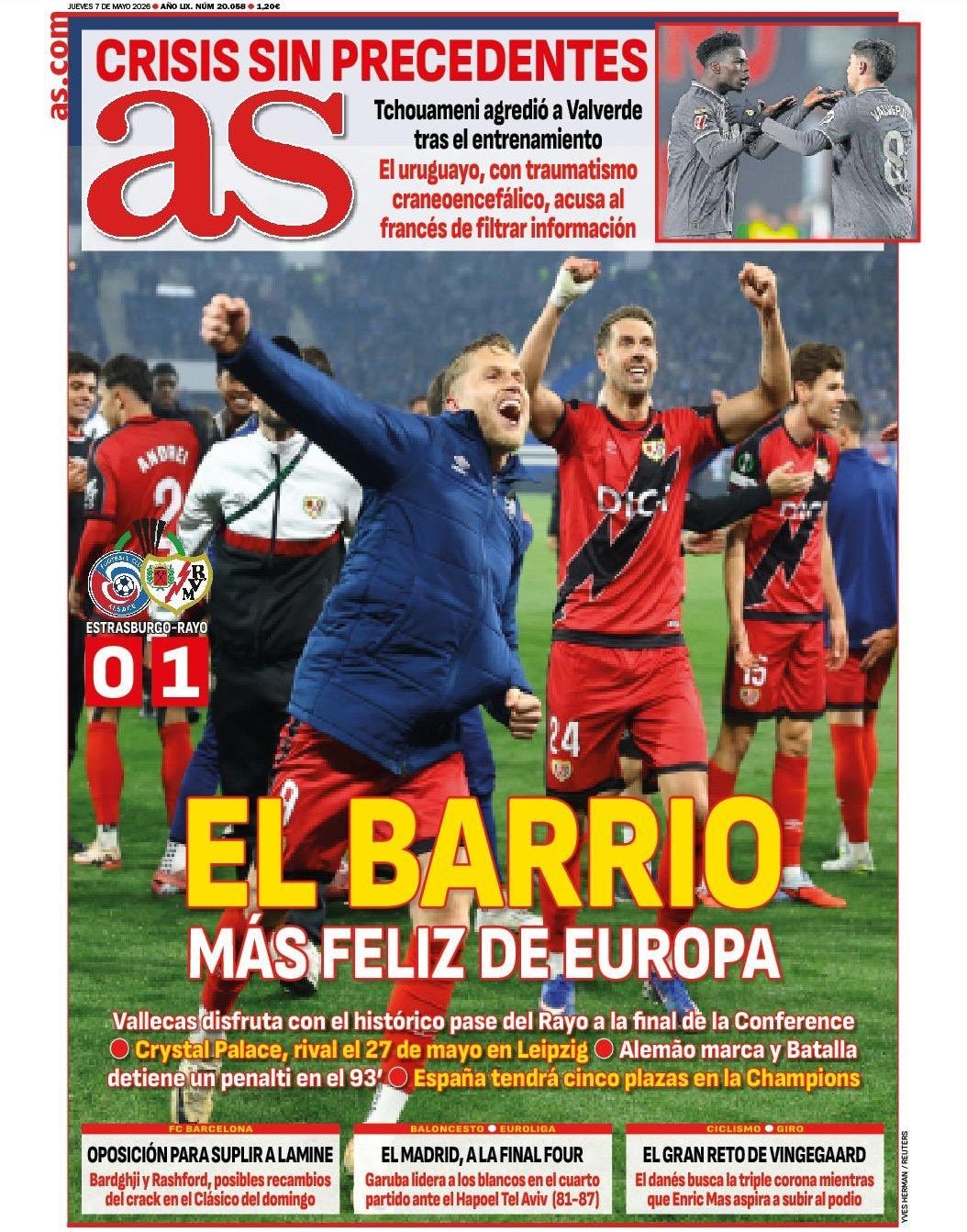
But no, Rayo Vallecano are the ones preparing to represent Madrid and Spain in their first ever European final 25 years after their first, last, and only European adventure. They will face Crystal Palace in the Conference League final in Leipzig. Everyone in Spain will be behind them, and in Spain that’s a rare thing.
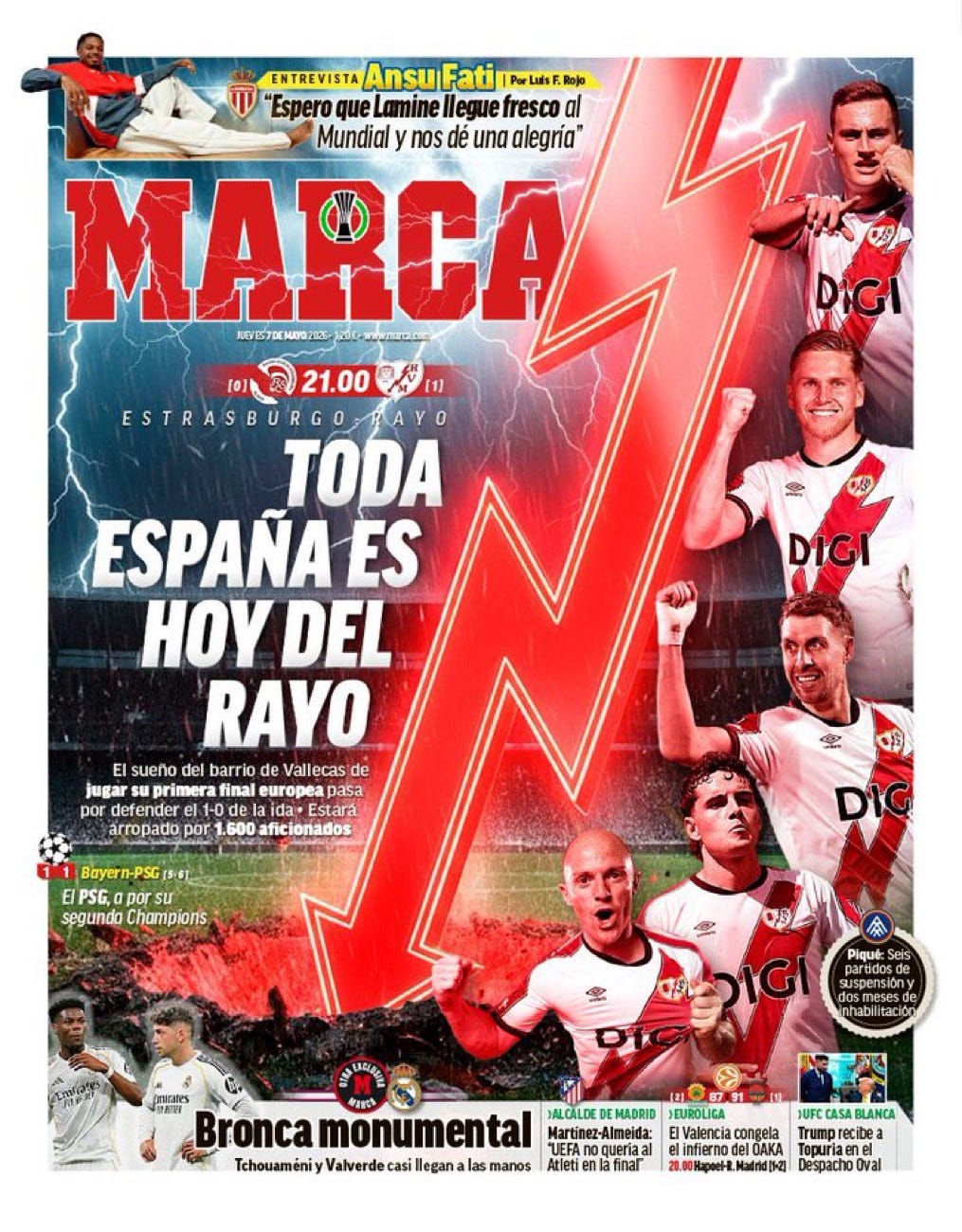
May is usually the month where Real Madrid flips the script on a season, turning disaster into glory with another expected but unexplainable comeback. This spring, a gentle wind of change blows south from the Paseo de la Castellana towards Vallecas - the massive working-class barrio, neighbourhood, home to a tiny club.
Most football fans in Spain have an almost patronising soft spot for Rayo. They’re known by the diminutive Rayito - little Rayo - and often described as simpático, a nice, friendly team. The kind that's not supposed to get in the way of everybody else at the business end of the season.
“I think this is genuinely one of the best things to have happened in football in years and years and years,” said Sid Lowe on The Spanish Football Podcast. “It’s sensational.”
That the team ranked 14th in terms of La Liga’s salary limit has made a continental final is indeed sensational.
Rayo Vallecano, however, are used to being where they’re not meant to be.
Down to earth
Over the past decade, property prices in Madrid have skyrocketed by 117% to €5,960 per square metre. And just nine metro stops south of Madrid’s kilometre zero - Puerta del Sol - Rayo Vallecano sit on prime real estate.
The club pays just €90,000 a year to rent their rickety Estadio de Vallecas from the Madrid regional government. In 2024, their centenary season, it looked like those days were numbered. Regional president Isabel Díaz Ayuso told Diario AS that the government and club were in talks to relocate because “it’s becoming increasingly unsustainable to stay in Vallecas.”
“Unsustainable is a club, that nourishes and is nourished by the ecosystem of a community, being forced to leave in favour of an urban development operation,” replied Daniel Verdú in El País.
Ayuso has since cooled talks of a potential stadium move, but everything - like everything at Rayo - is still up in the air.
Despite being in an area ripe for redevelopment during a property boom, Vallecas has so far resisted the invasion of pristine studio apartments, speciality coffee, and açai bowls. The emblematic laundry lines still connect the high-rise apartment blocks that have defined the barrio’s skyline for decades.
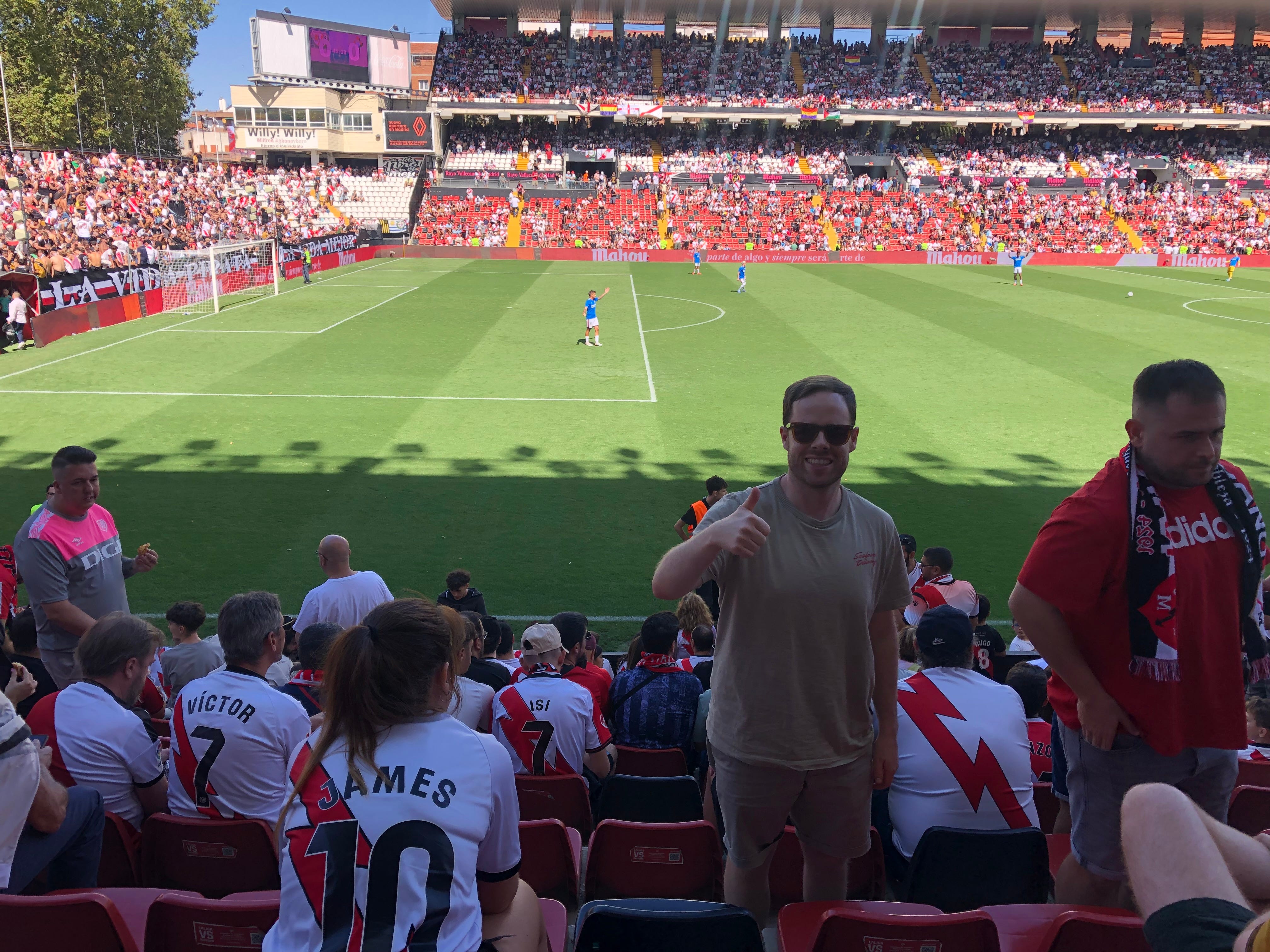
In the 1960s, when the district was still semi-developed, it was said that people from Vallecas could be recognised by the mud on their shoes. Today, my wife can tell if I’ve been to a Rayo match if the arse of my jeans are filthy and I bring a waft of (second-hand) marijuana smoke into the house.
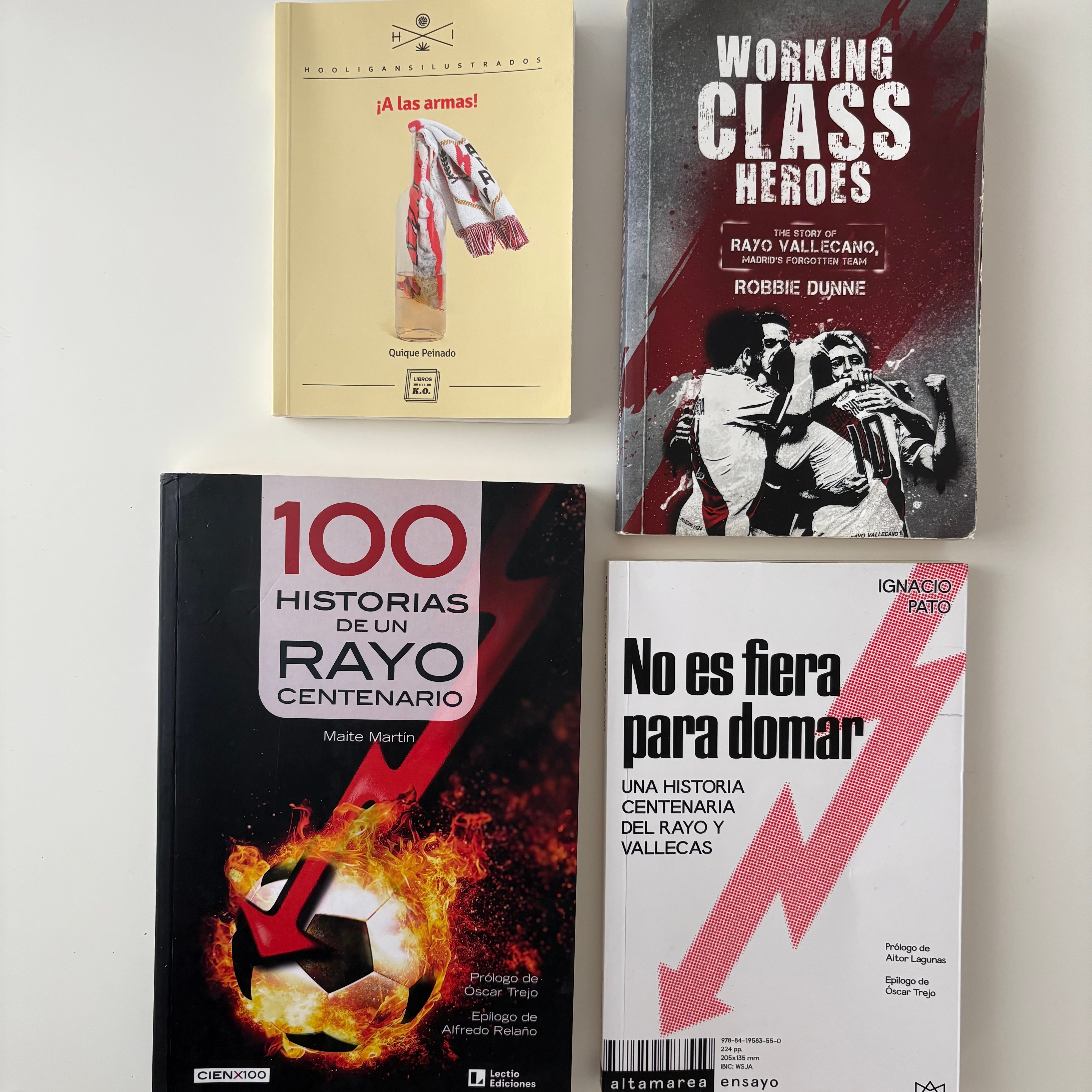
In his book A las armas, Quique Peinado wrote that the Holy Trinity of Vallecanidad is left-wing politics, Rayo Vallecano, and boxing. Its working-class identity has been shaped by two main waves of migration: the internal movement of rural Spaniards arriving in the capital in the 1950s and foreign arrivals since the start of this century.
Today, 20% of Spain's population was born outside the country - in parts of Puente de Vallecas that figure tops 50%. But rather than diluting the area’s working-class identity, it has simply given it an international flavour.
“What Rayo as a club and Vallecas as a barrio have done in keeping their doors open to newcomers such as myself but remaining first and foremost a working-class club of the area is quite something,” wrote Robbie Dunne in Working Class Heroes, The Story of Rayo Vallecano.
As local journalist Antonio Luquero put it: “A vallecano is born wherever they want.”
The community - one that embodies working-class solidarity and social activism - and Rayo Vallecano the institution, however, are two very different things.
An abusive relationship
Estadio de Vallecas sits on a street named after a clown. In many ways, it’s the perfect address for a club that operates like a full-time circus.
During Rayo’s run to the Conference League final, Phil Kitromilides, La Liga commentator and Rayo Vallecano season ticket holder, summed it up well:
“They don’t sell online tickets. The stadium often doesn’t have running water in the toilets. The pitch is a joke. The club shop looks like a teenager’s cupboard. Their training ground is in pieces. IT IS AN ABSOLUTE MIRACLE!!!”
Ticket information for the final home game of the season on May 17th was posted on social media two days before kick-off. It’s the only club in Spain’s Primera division that you have to queue up to buy tickets. The queues are often hours long - in the bitterly cold Madrid winter, in the sweltering Madrid summer.
On the official club store, El Mundo described how “the half-empty shelves were more reminiscent of a store in New Orleans before a hurricane than a football shop on any given Friday.”
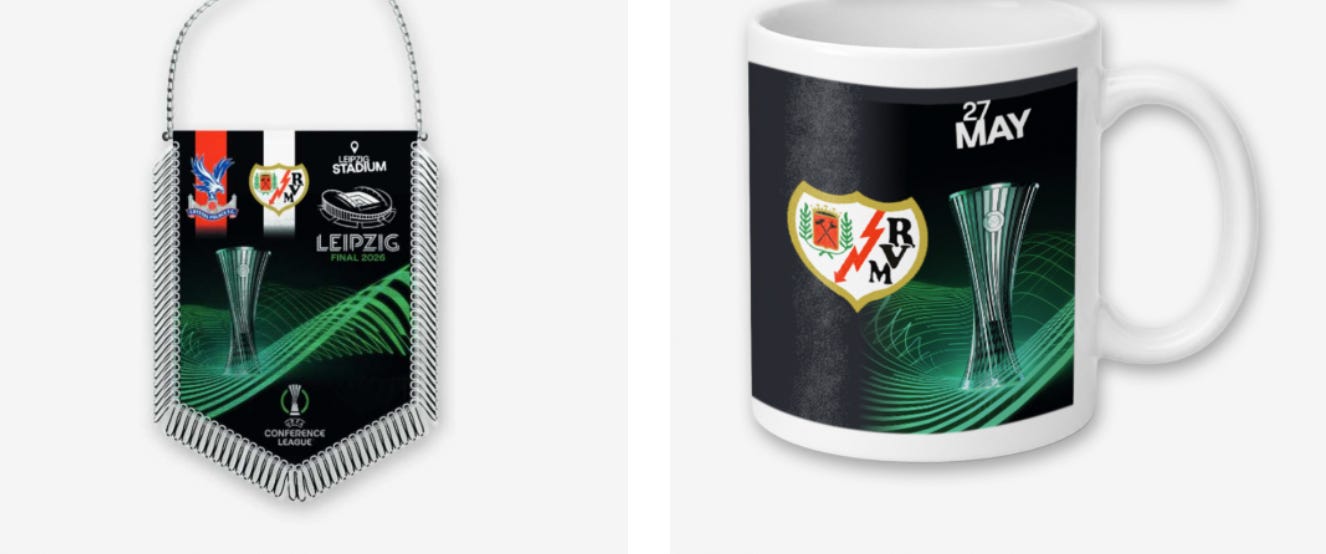
And any Rayo fans looking to buy merchandise to commemorate the biggest game in the club's history will have to do so through their opponent's website. (!!)
Earlier this season, before a game against Real Madrid, a journalist took a plug out of a socket at Estadio de Vallecas to charge his laptop and wiped out the power to the entire ground. It turned out one plug powered the whole stadium.
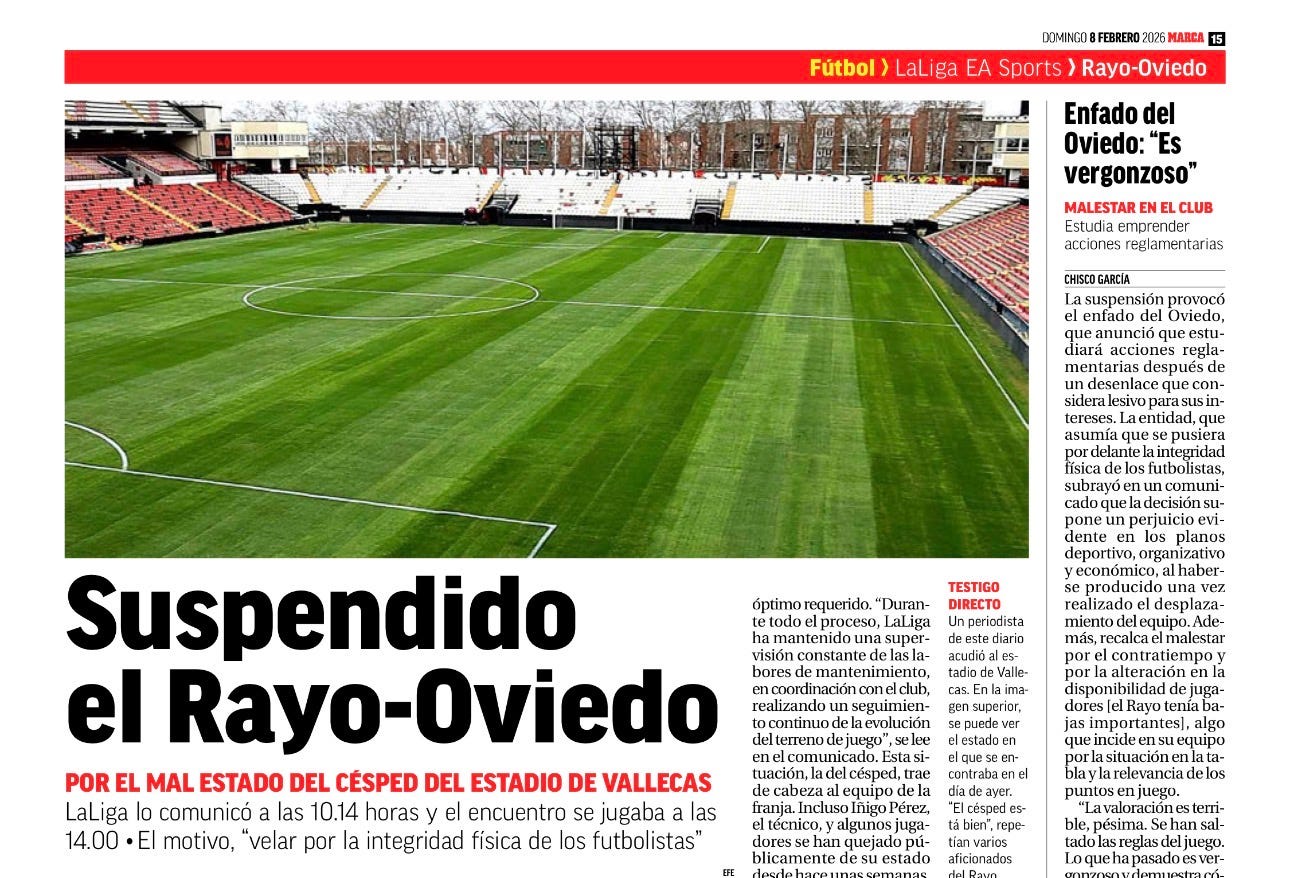
In February, Rayo’s game against Real Oviedo was postponed because the pitch was deemed unfit for purpose.
A friend of mine once told me that every time he goes to a game, he wonders if it will be his last.
Rayo is owned by Raúl Martín Presa. “A fella with a lot of hair gel and little empathy,” wrote Quique Peinado, “he’s adamant to end the spirit of the club.” In 2011, Presa bought Rayo Vallecano - and its €40 million debt - for €961.66.
“I treat the team like a child,” he told El Mundo. He treats Rayo fans the same way. There’s little to like and a lot to loathe about the Presa administration but despite all this, the circus somehow always stays on the road.
Play it by ear
The first rule for understanding Rayo Vallecano is simple: don’t bother. This week, when writing this, I broke my own rule.
I wanted to find out whether what Rayo are doing is the milagro, miracle, so many people are calling it, or whether there’s a science behind the madness.
In the 90s, Rayo coach Camacho summed up the club’s transfer policy as “buying potatoes, selling caviar.”
In practice it meant a revolving door of loans, frees and minimal fees. Bueno y barato, good and cheap.
Over the years, Rayo fans have seen all sorts: from the up-and-coming Diego Costa to the over-the-hill James Rodríguez, and a Bebé who kept coming back.
A friend, a Madrid-based scout for a Premier League club, told me that Rayo are reactive rather than proactive. Unlike clubs like Villarreal and Real Sociedad, who have built sustainable models around developing and selling talent, there’s no buy-to-sell model or meaningful youth system in Vallecas.
Most arrivals are in the 28-32 age bracket and have little to no resale value - these days, Rayo aren’t even interested in selling caviar. The model, if you could call it that, is based largely on improvisation.
When it comes to recruitment, Rayo can’t compete on wages, and the training facilities are awful. But what they can offer is Madrid - the third sunniest capital in Europe behind Athens and Rome, with nearly 3,000 hours of sunshine a year and the second-highest average temperatures on the continent.
Only six teams in Primera have a lower salary limit than Rayo's €49m. Raúl de Tomás is still their record signing at €11m. Crystal Palace, their opponents in Leipzig, have a squad value five times higher than Rayo's.
In February, Palace spent around €50m on Jørgen Strand Larsen and nobody batted an eyelid.
Since Covid, La Liga's middle class has collapsed.
Clubs like Bournemouth and Brentford now have the cash to hoover up players who, in the mid-2000s, would've joined the likes of Sevilla and Valencia. Last summer, Premier League clubs spent five times more on transfers than their Spanish counterparts.
While building a more financially sustainable competition, La Liga's strict financial regulations have further hindered its competitiveness in the transfer market, leaving many of Spain's biggest clubs still struggling to adjust to the uneasy reality of high turnover, short contracts and constant wheeling and dealing.
They've had to adapt to this uncertainty, Rayo were moulded by it.
It feels fitting, then, that during this period of flux, Rayo has never been more stable. A recent win over Villarreal secured them top-flight football for a sixth consecutive season in Primera for the first time in their history.
And according to my scout friend, there’s one thing that Rayo are very good at: identifying the right type of player for their manager's style and knowing exactly what players to bring back to the club when the time is right.
Beyond the football, Rayo have a rare gift for finding the right personalities. “Vallecas is not a place for idols or kings,” wrote Maite Martin in 100 Historias de un Rayo Centenario. “Admiration isn’t earned with money or power, but with work, humility and values.”
When new signings arrive, the Bukaneros - Rayo's ultra fan group - take them on a tour of the neighbourhood, showing them historic sites and the places they drink beer before games.
From day one, the message is clear: leave your ego at the door.
Free of great expectations and the back-breaking weight of past glories that continue to prove too heavy for many once-great clubs, there’s a carefree spirit about Rayo that can be traced to its place in a community that shows unwavering support while expecting little in return.
Rayo fans are perpetually furious at Martín Presa, but unlike at Real Madrid, I've never seen them turn on one of their own on the pitch.
Nonetheless, ensuring Primera survival and reaching a major European final are two very different things. I asked Ignacio Pato, author of No es fiera para domar - a book about Rayo and Vallecas published for the club's centenary in 2024 - whether what they had achieved was indeed a miracle:
“I think the word milagro is being overused. What Rayo have achieved has nothing to do with miracles - it comes down to a group of committed, talented players who have found their level at the right time, like Lejeune or Batalla. Then there's good coaching - first from Iraola and now Iñigo Pérez. And then there's the energy of the fans in Vallecas. Almost everything good that happens at Rayo happens not because of the institutional management, but in spite of it. And the truth is - in long competitions, leagues, European tournaments, there are very few real miracles.”
“When I’m at the ground I think it could be Old Trafford or Anfield,” said Rafael Garcia Navas, Rayo’s stadium announcer, in 100 Historias de un Rayo Centenario. “Vallecas has the charm of English grounds - with the fans right on top of you and the direct style of play. The atmosphere is incredible. Anyone who visits once always comes back.”
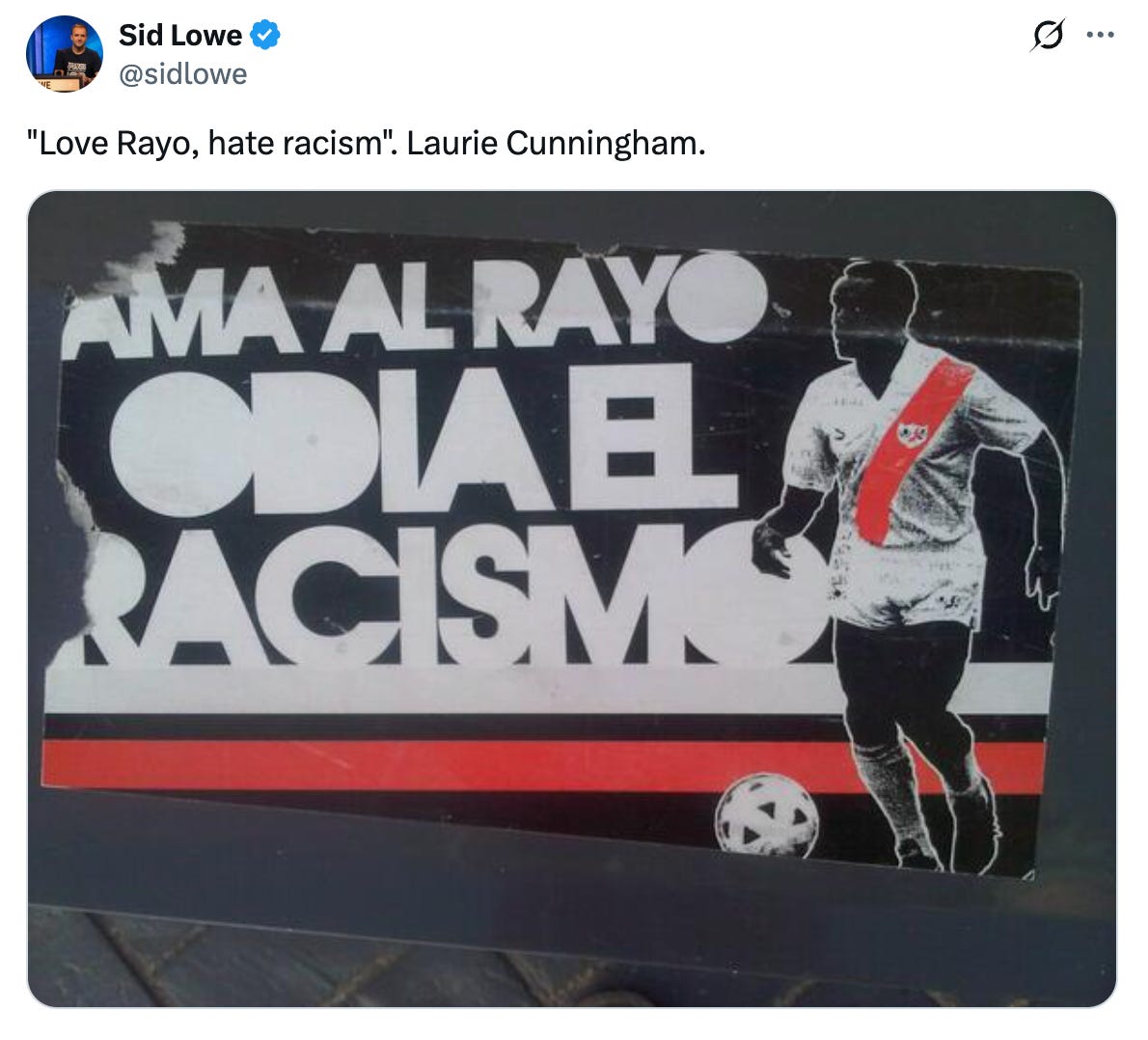
Laurie Cunningham was one of the many who did.
The Londoner joined Rayo for the 1986/87 season, left for Wimbledon, and returned a year later. Tragically, he was killed in a car crash just northwest of Madrid in the small hours of Sunday July 16, 1989. In the weeks prior, he had been in talks about a new contract to stay in Vallecas.
“In the barrio he was able to be more Laurie than Cunningham,” wrote Maite Martin. In Spain, football fans address most players by their surname when asking for autographs or hurling abuse. That Vallecas locals knew him simply as Laurie said everything about how they valued him as a person. He still features in tifos and murals at the stadium today.
The final countdown
At a time when modern football clubs cynically squeeze fans for every last euro, Rayo are something of an unintentional tonic.
Very much on brand with the barrio’s politics, there's a perverse type of communism to the match day experience. Everyone has to stand in the same long line for tickets before sitting in the same filthy seats. And you'll never be sitting beside someone who has just dropped €500 in the club shop because the shop barely has €500 worth of merchandise to sell.
“Vallecas is different,” wrote Maite Martin. “It smells different. It tastes different. It sounds different. It sounds like rock music.”
Like dad rock, Rayo Vallecano are a bit cheesy, but they get under your skin. Their goal celebration music was a song that topped the charts in 1986, but everybody goes nuts every time Europe’s synth intro gives way to the full band crashing into The Final Countdown.
In the 1980s, Estadio de Vallecas hosted a number of iconic gigs: Deep Purple, Queen, Metallica, and Scorpions. Five years after rocking Vallecas in September 1986, Scorpions - Germany’s most successful rock band - released Wind of Change. It was the song that would become the de facto anthem of the fall of the Berlin Wall and the end of communism in Germany. In his podcast of the same name, Patrick Radden Keefe waxed lyrical about the song's message of “idealism and solidarity and hope.”
Carrying that same spirit, the Rayo rockers are bound for Leipzig - the city that each year celebrates Bach's birthday and where the fall of the wall began.
Writing about Leipzig’s iconic Karl-Liebknecht-Straße, Katja Hoyer described its architecture as “an eclectic mix of styles from art déco and neoclassicism to art nouveau and socialist-era buildings. As strange as that sounds, it works brilliantly.”
Change a few words and she could have been describing Rayo Vallecano's squad of loanees, returnees and journeymen. As strange as it all sounds for modern day elite-level football, it works brilliantly.
Rayo’s first European adventure came in 2000/01, when they made the UEFA Cup qualifying draw on the basis of their fair play record. With just two spots up for grabs between 14 teams, club officials didn’t like their odds of being drawn out, so they didn't even bother turning up to see their name pulled out of the hat. Twenty-five years later, they are back in Europe on merit.
Reaching the final has already earned the club close to €18 million, but few expect Martín Presa to re-invest the prize money in the club. The brutal Madrid summer heat will again come around too fast. Rayo fans will be back queuing for hours to renew their season tickets. They’ll be tweeting the club to ask when the new jerseys will be on sale.
But all that can wait. A journey that began in Belarus in August will soon end in Leipzig on the last Wednesday of May - what a ride it’s been for Rayo.
“It is because these stories - the ones in which odds are overturned or dreams come true or the unexpected comes to pass - are so unusual now that, when they do appear, they tend to capture the imagination,” wrote Rory Smith in The Observer. “They remind us that what actively engages an audience is about hope, and possibility, rather than watching passively as economic reality plays out, again and again.”
The gap between the wealthy clubs in European football and the rest is now so big that to have any chance of being the best of the rest, you have to be able to deal with the vertigo of transfer market improvisation every summer. With decades of thrifting experience, Rayo Vallecano were made for moments like this. They’ve got an eye for a deal and a sixth sense for egos - the kind of personalities you don’t want with you down in the trenches in April.
(Another contradiction of Rayo is that their record signing, “RDT,” had a massive ego)
Much like the young boxers who turn up to the sweaty boxing gym tucked inside the Estadio de Vallecas every evening, Rayo know how to roll with the punches. When it feels like they’re closest to the breaking point, the players know that the community will be behind them until the final bell.
So right now, as they ride this gentle wind of change for a few dreamy weeks at least, it feels like Rayo Vallecano are, for once, exactly where they’re supposed to be.
Take me
To the magic of the moment
On a glory night
Where the children of tomorrow dream away
In the wind of change
Scorpions, Wind of Change.
Until next time amigos,
Brendan
***You can support the research, translation, writing, editing, and newspaper subscriptions behind this content with a one-time contribution - gracias!**
Great piece Brendan. Let's see how they get on tonight!
Got to see one game there about 20 years ago. Celta Vigo leading 3-0 at half time, ended up 3-3. Tried lots of street stalls for Rayo Vallecano scarf before eventually finding one hidden away behind Real and Atletico ones.